
Your Step-by-Step Guide to Building a Sustainable Fitness Routine That Actually Works
Building a Sustainable Exercise Routine with Health Challenges – Part 4 of 4

Disclaimer: I am not a doctor or therapist. This blog is based on personal experience and is for informational purposes only. Please consult a qualified medical and/or mental health professional before starting anything new. Full Disclaimer can be found at the bottom of this page. This post contains Amazon affiliate links.
You don't need to wait until you have the perfect plan, the right equipment, or a string of good days. You can start exactly where you are today, with whatever energy you've got.
If you’re just joining us now, this is the final post in a series of four that brings together all the mindset shifts, energy management strategies, and explanations for your roller coaster journey that will help make this sustainable fitness plan come together. Check them out if you get lost or you want to dive deeper into these topics.
Now, let’s put everything we’ve talked about together into one easy to follow framework that will help you stay with your journey long term..
Step 1: Creating Your Personal Training Framework
From Chore to Adaptable Goal-Setting
How many times have you said to yourself: “I will work out every Tuesday and Thursday at 6 am.”
Sounds great until Tuesday arrives with a migraine and Thursday brings a flare-up. The rigidity doesn't work when your health is unpredictable or you’re on a non-linear journey of recovery from a health setback.
The rules you've made for yourself break.
You feel like you’ve failed before you’ve even really begun.
If you take a small amount of time to set out the why for taking on exercise again, then your plan can bend and flex with your ever changing state of health while still keeping you on track. That why will pull you through the hard times, instead of a chore that will push you to the ground when you stumble.
A chore might be “50 squats three times a week," but adaptable goal-setting would be "I want to get back into badminton so I can play with my friends again. For that, I need to strengthen my thigh and glute muscles. If I aim for 3 times a week, I’ll likely have low energy or flare ups during some of those times. What are some exercises I can do to continue toward that goal while lying on the couch?"
Instead of "Saturdays are my big workout days," try "I want one big workout each weekend, but I’m flexible on whether it’s a hike with friends, or weight training." Your exercise routine becomes a series of small achievements when your health feels chaotic.
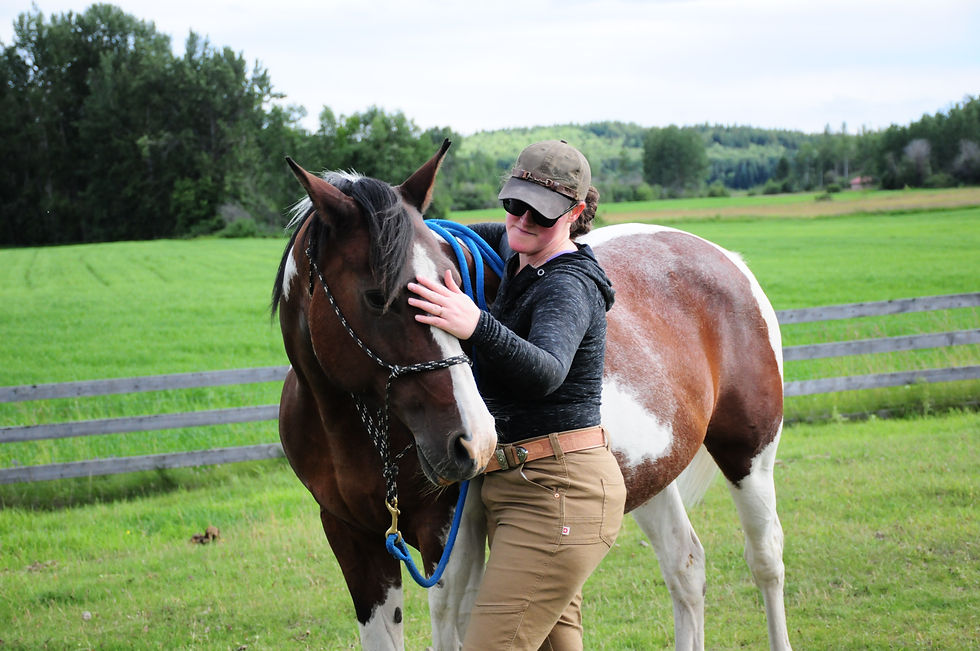
Think about it as "Connection over perfection." Connection with your body over perfection of your workout or training. Some days it means hitting every target with my bow and arrows. Other days it means just giving my horse a brush and calling it good. Both count. I created connection: with myself, with my horse, with my goal. Even without the perfect workout every time.
Your Core Training Philosophy
Your reason for taking up this worthy challenge could be anything that gets you really motivated: to play hockey with friends, to keep up with your kids, or because you miss feeling capable. Is it the moment when your body remembers how to move in a way that feels strong? Maybe it's proving to yourself that you can still learn new things. Or maybe just having something to look forward to that isn't a medical appointment. All those and more are real to you, and because of that, they provide a deep sense of intrinsic motivation.
What actually matters to you on this journey? It's not what Instagram tells you matters, nor what worked for your friend. It’s what lights you up (gives you a spark of energy or inspiration) even on medium or low days.
Whatever it is, write that down.
That's your why, and it's going to carry you through the days when technique and your perfectly planned workout goes out the window.
Your Non-Negotiables
Once you're clear on what pulls you forward, you need to set a few boundaries that protect your ability to keep showing up. These aren’t rigid rules about performance. Remember, this isn’t about making this a chore, it’s about helping you feel pulled forward rather than pushed. Feeling secure helps with that.
So with sustainability in mind, create a few guardrails so that when you run into a specific situation, you have already given yourself a standard to follow or a permission slip to step back.
A few of mine are: no horse training when dizzy (learned that one the hard way), always have an escape plan to boost confidence, and try not to sacrifice tomorrow's possibility for today's ambition.
Ask yourself:
What is the line with my symptoms that I shouldn’t cross when attempting to do my activity?
What would boost my confidence when doing my activity?
If I’m feeling good one day, is it okay to push myself that day, or should I stick to the plan so I don’t cause a bad day tomorrow?
Each of these answers will be individual to you. Answer them honestly, you’re the only person looking at them. If wearing knee and elbow pads while playing badminton would honestly help in the beginning because your coordination is affected by your health, then take note of that.
The Sustainable Progression Mindset
Sustainable doesn't mean slow. It’s building something that can weather your worst flares and still be there when you resurface.
Traditional training thinks in weeks and months. Sustainable training thinks in seasons and years. Some seasons you're building new skills. Other seasons you're just maintaining what you've got. Both are necessary, both are valuable, and most importantly, this mindset works with you over a long period of time.
(It's why I sometimes focus on fun and skill over traditional gym fitness, and it's why I believe finding some kind of movement you're genuinely drawn to – whether that's a sport, dance, hiking, or something else entirely – often tends to be more sustainable and motivating than fitness for the sake of fitness.)
Give yourself permission to build something that might take a little longer, but will give back so much more than you expect in the long run. Whether you're dealing with chronic illness, recovering from injury, managing mental health challenges, or just rebuilding after life knocked you sideways, you understand that this approach works because it honours where you actually are, not where you think you should be.

Step 2: Progress Tracking That Doesn't Gaslight You
Why Traditional Accountability Fails
If you struggle with motivation (like me), you probably need someone or something external to be accountable to. That's normal. But here's the problem: traditional accountability systems weren't designed for unpredictable health.
A chore with a tick box doesn't work when some days you can barely stand. Personal trainers are hit or miss - some push you every time, leaving you exhausted and demotivated. Others get nervous about your health and won't challenge you at all. Few, in my experience, actually know how to work with what you have on any given day.
You are the one who knows you best. Your body's signals, your energy patterns, your capacity on any given day – that's information only you have access to.
So instead of hoping external accountability will somehow work this time, you need to build your own tracking system first. Then you can bring others in to support it.
Building Your Own Tracking System
Building a plan for successful accountability is so important. This is where the 3-Option Solution and your pattern tracking information become your foundation. These aren't just nice ideas – they're practical tools that help you measure progress honestly without gaslighting yourself about what's actually happening.
Adaptive Success Tracking
Say you had a plan to go for a bicycle ride, but your balance is off and you don't feel safe doing that. But you do feel up to going to the gym and cycling on a stationary bike for 15 minutes instead.
So you do that, and after, you write down how you adapted and what you managed to do. It still gives you a mental boost. It still feels like you accomplished something. To your brain, it's still a win.
Plus, now you have a no-brainer Plan A to Plan B switch that you've already done before. Next time you'll make that adjustment in a moment without thinking twice about it. You know what you need, and you'll take that step.
Tracking Setbacks as Data
But what about when setbacks hit and you can't do anything?
During the low times, instead of writing out what you managed to do (or couldn't do), write down information about your recovery.
Recovery questions you could answer:
How long did recovery take?
How did you feel on each day?
What is the speed of recovery from this flare?
What did you do to adapt?
What did you manage to do instead?
What did you learn about adapting or pivoting?
How do you feel about your recovery?
Tracking your recovery will also help you build emotional resilience. It will help you 'bounce back' easier and take up where you left off when you're able to. You might discover that it was fewer days than it felt like. Or that the pain wasn't as bad as last time. Or you still managed to go grocery shopping when last time you couldn't.
This information gives you perspective you simply can't see any other way.
This isn't the usual 'push yourself to bounce back' type of resilience, it's the smart kind: you rest, you reach, you bounce back with wisdom, not just stubbornness.
I might have just spent 4 days sick because of stress or stacking hay or spending too long working with my horse, but when I can stand, when I can walk, when I can get back in the saddle, I do it. I get back on the horse (literally) but with better awareness of my limits.
Strategic retreat, strategic rest, then strategic activity. Then it all comes together.
Working with External Accountability
Now that you have your own tracking system (your 3 options, your pattern data, your recovery insights) you can bring other people in to support your journey.
When you talk to the friends you exercise with or your personal trainer, come prepared. Take just 1 minute to assess your energy and know whether Plan A, B, or C would be best for you today. Then bring it up: "Hi, I know we planned a cardio day today, but I'm not feeling super balanced on my feet. Could we switch it up to seated exercises?"
It's a simple way to let your personal trainer or friends know how you're doing without dwelling on your limitations. Most people are more than happy to change it up when you give them clear direction.
Bam! Your workout just became flexible and you still accomplished something valuable.
And about that dopamine hit from ticking off a chore box: yes, it feels good... but dopamine, along with a myriad of other positive brain chemicals, also gets released when you're simply doing something you enjoy whether or not you reach a goal or stuck to the plan.
Your tracking system helps you see all the wins, not just the perfect ones.

Step 3: Week-by-Week Implementation Plan
Now that you understand the mindset and tracking systems, here's how to actually implement them week by week.
Week 1-2: Foundation Building
For these first two weeks, you’re going to gently experiment and become a detective.
For the next 14 days, try these 2 things, and see what happens:
Spend 30 seconds each morning asking: How's my energy? How's my balance? Any pain? What does today feel like it's offering me? (You know what I'm going to say here). Use your phone, a scrap of paper, whatever. You're not tracking for your doctor or anyone else—this is intel for future you. The you who's trying to decide if today is a Plan A, B, or C day. Just figure out your rhythm. Maybe you crash every Tuesday. Maybe thunderstorms wreck you for three days. Maybe you're always better after you've had a good cry. This is your data to collect.
Try one small thing each day, experiment. Did doing some stretching today help ease the pain or get the blood flowing a bit and you surprised yourself by having the motivation to do the dishes? Did you try 5 squats? Or go one extra block during your dog walk? How did that feel? Write that down too. Start to learn where the line is between your brain’s overprotective nature and your body’s capability.
If you'd like me to walk you through the first 5 days of building your own exercise routine, sign up for my free 5-Day Movement Reboot e-course.
Week 3-4: Basic Framework Implementation
Now you get to play with the 3-option system.
Write down a Plan A, B, and C for this week. Make it simple. You can just expand on what you’ve been trying over the last 14 days, but don’t make it fancy. Just note down what you'd realistically do on a great day, an okay day, and a rough day.
Perhaps the activity you’re drawn to is running half marathons. But it’s been 5 years since you’ve gone for a jog. Last week you tried walking 1 kilometre and it went well. So you want to try walking 2 kilometres two times this week:
Your Plan A on the days you scheduled this activity is to walk 2 kilometres. But that day arrives and it’s not a great day, you have medium energy and aren’t feeling that pushing yourself would be beneficial.
So you go with your Plan B: an easy 1 kilometre walk.
Or perhaps, you had a flare up and had to skip it that day. So you go to your Plan C: a 15 minute walk tomorrow or as soon as you feel a bit better.
Flexible. Adaptable. Achievable.
This is how you start practicing the intelligent pivot. When you wake up wanting Plan A but your body's offering you Plan C energy, can you make that switch without drama? Without feeling like you're failing?
This is also where you learn the difference between your body betraying you and your body communicating with you. Most of the time, it's the latter.
Month 2 and Beyond: Sustainable Fitness Routine Refinement
You'll start seeing patterns in your data. Maybe you always feel stronger three days after a good workout. Maybe stress hits you harder than weather changes. Maybe your "medium energy" days are actually your most creative training days.
Use this information. Plan your challenging activities around your natural rhythms. Schedule rest before your body demands it. Start thinking in ‘building’ phases and ‘maintaining’ phases.
As you gain trust in your ability to adapt and achieve, you’ll see a growth in your trust of yourself, your health and your body. And with that, you’ll be able to plan more, and gain more faster. It’s just about understanding your personal rhythms and tending that spark of inspiration to keep the motivation flowing.
Common Challenges and Solutions
This is not going to go perfectly. But that’s kind of the point that I’m writing about. Your health isn’t perfect, the plan has to reflect the flexibility you need.
But things will come up, so let’s go through a few of them:
Perfectionism creeping in? Remember that your imperfect Tuesday counts more than the perfect workout you never do.
Comparing yourself to others? Their body isn't managing what yours is. Their Plan C might be your Plan A, but we all have to start where we are. You probably don’t know the full story of how hard or how long they’ve worked to get where they are. If you make a conscious effort to enjoy the journey in whatever way motivates you most, you’ll find yourself paying less attention to others.
Motivation tanking? That's normal. Motivation comes and goes. Frameworks, adaptable goal-setting, and gentle habits carry you through the valleys. But it’s also important to check on your spark of inspiration that we talked about here. If it’s missing, take a step back and refill the tank. Dream about going on that 3-hour kayak tour. Remind yourself of the achievements you’ve already accomplished. Plan the adventure you’ll have when you’re ready. Relight that spark while you rest your body for another day.
Real life interfering? Build your routine around your actual life, not your fantasy life. If you can only manage 10 minutes between work and dinner prep, work with 10 minutes. Can you get up 15 minutes earlier without changing a thing during the day? Do it. Can you get your partner off the couch so you can both do 10 minutes of ballroom dance practice before sitting down to watch TV? Do it. (It’ll be good for your relationship too.) Sometimes you just need to give yourself permission to want to do a thing, to find a way to fit it in.
Building Your Support Network
Find Your People
Find people who understand that some days "I brushed my horse" is as much of a victory as "I hit every target." Coaches, trainers, friends, family, some of them will understand, and some won’t. Tell the ones who do and let them cheer you on.
Look for healthcare providers who won't dismiss your activity goals as frivolous.
Connect with others navigating similar challenges – maybe an online community filled with practical wisdom and encouragement (I'd love to build one, let me know what you'd like to see!). Books, blogs, and others talking about working within their means and moving forward are a great source of encouragement.
Your support network doesn't need to be huge. It just needs to be real.
Your Next Steps
What You're Actually Building
This is more than fitness: this is building a relationship with your body and your goals. This is finding those pieces of you again that make you feel like you. I found it too when I stepped back into the world of horses despite severe balance issues. It was hard work, and took a lot to face new fears, but I love every minute of time spent with my pony.
You’re building the ability to adapt and continue regardless of circumstances. And you can use that skill in more than one aspect of your life.
At the end of it, there’s a training approach that's uniquely yours. This system works for you, and with your circumstances. You’re finally taking agency over your health and goals.
Your Starting Point Today
You have everything you need to start building a sustainable fitness routine that works for you. So what’s your first step going to be?
Coming up next: I delve deeper in how to create Rituals of Recovery that actually help you rejuvenate your mind and body quicker.
Ready to break the crash-and-burn cycle? Get my Free 5-Day Movement Reboot email series and learn to work with your unpredictable energy instead of against it. No equipment needed, no perfect days required—just practical strategies that actually work with your reality. Get started for free!
Want dig deeper into finding your spark of inspiration?

"Start where you are. Use what you have. Do what you can." —Arthur Ashe
If you’d like to support this blog or my journey, buy me an arrow! (The land spirits take them as sacrifices.)


Comments